\n\n\n\n\n\n\n
Location: Mangalore, India We Ship All Over India
Board DesignExperienced4 min read

Surfboard Rocker Explained

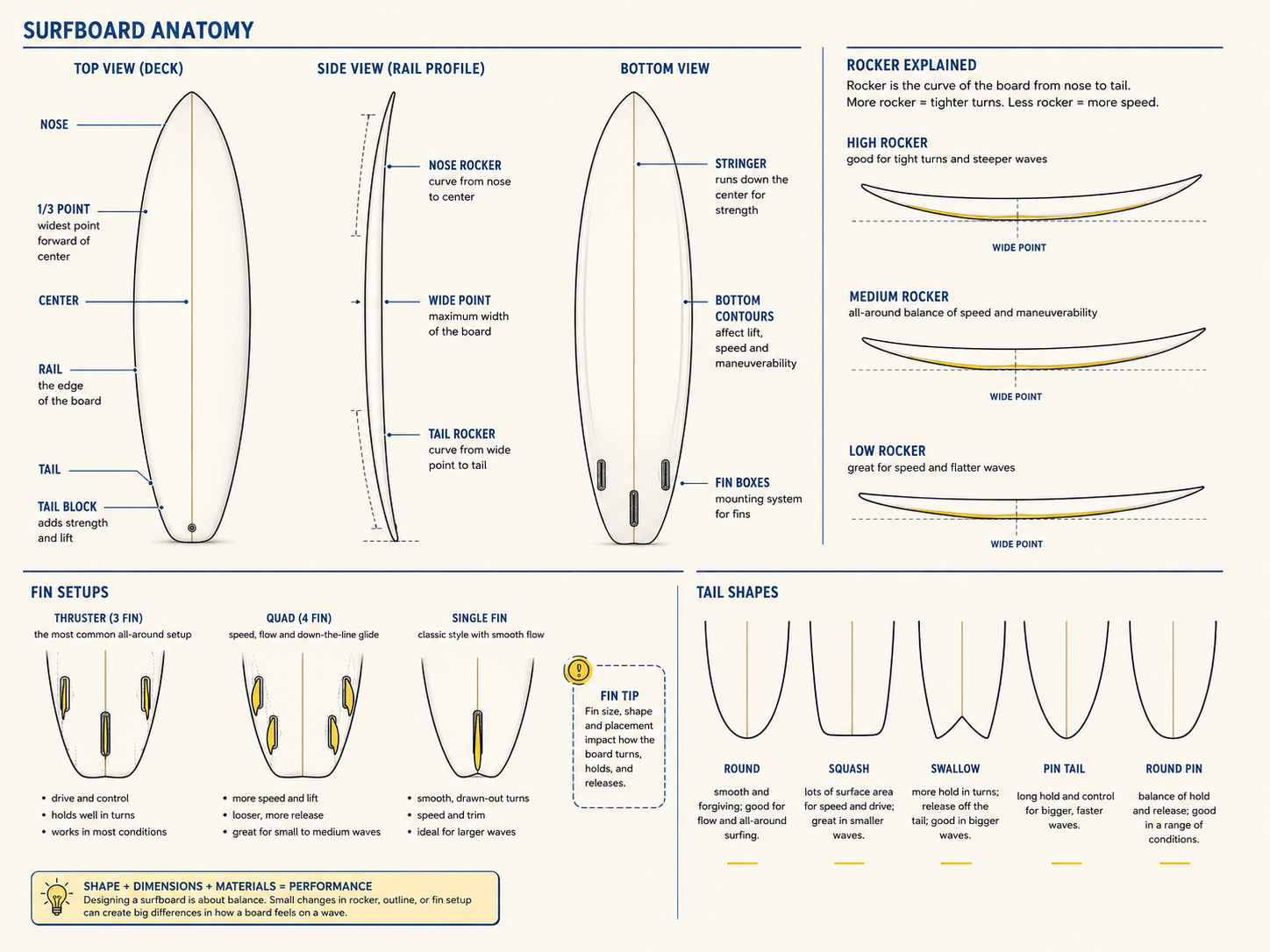
Rocker is the curve of the surfboard from nose to tail. Flatter rocker can support speed and paddling, while more curve can help a board fit steeper sections, though the complete shape determines the result.

Quick read

Three things to know

The essentials before you continue.

  1. 01Rocker changes along the board, not as one single number.
  2. 02Flatter is not always faster in every situation.
  3. 03Match rocker to waves, ability and the rest of the design.
Default guide image for Surfboard Rocker Explained. Replace using the Featured Image panel.

The board’s curve

Viewed from the side, a surfboard is not flat. The nose and tail lift away from the centre in different amounts. That curve influences how the board paddles, enters a wave and follows the wave face.

Flatter sections

A flatter curve can create efficient glide and speed over softer water. It may also require more care in steep take-offs because there is less nose lift available to fit the curve of the wave.

More curve

Additional rocker can help a board turn within a tighter arc and fit steeper sections. The trade-off may be reduced straight-line glide, especially in weak waves or for a surfer without strong paddling.

Use the full design

Nose rocker, tail rocker and the curve between them all matter. Rocker should be read with the board’s outline, fins and bottom contours rather than treated as a single performance setting.

What this means for a beginner

A board with a forgiving entry and enough paddle support is usually more useful than choosing rocker from performance language alone.

What this means for a progressing surfer

Notice whether your regular waves are weak and open or steep and fast before choosing a major rocker change.

Common mistake to avoid

Judging rocker independently from length, outline, rails and bottom shape.