
\n\n\n\n\n\n\n
Location: Mangalore, India We Ship All Over India
Board DesignExperienced4 min read

Surfboard Rails Explained

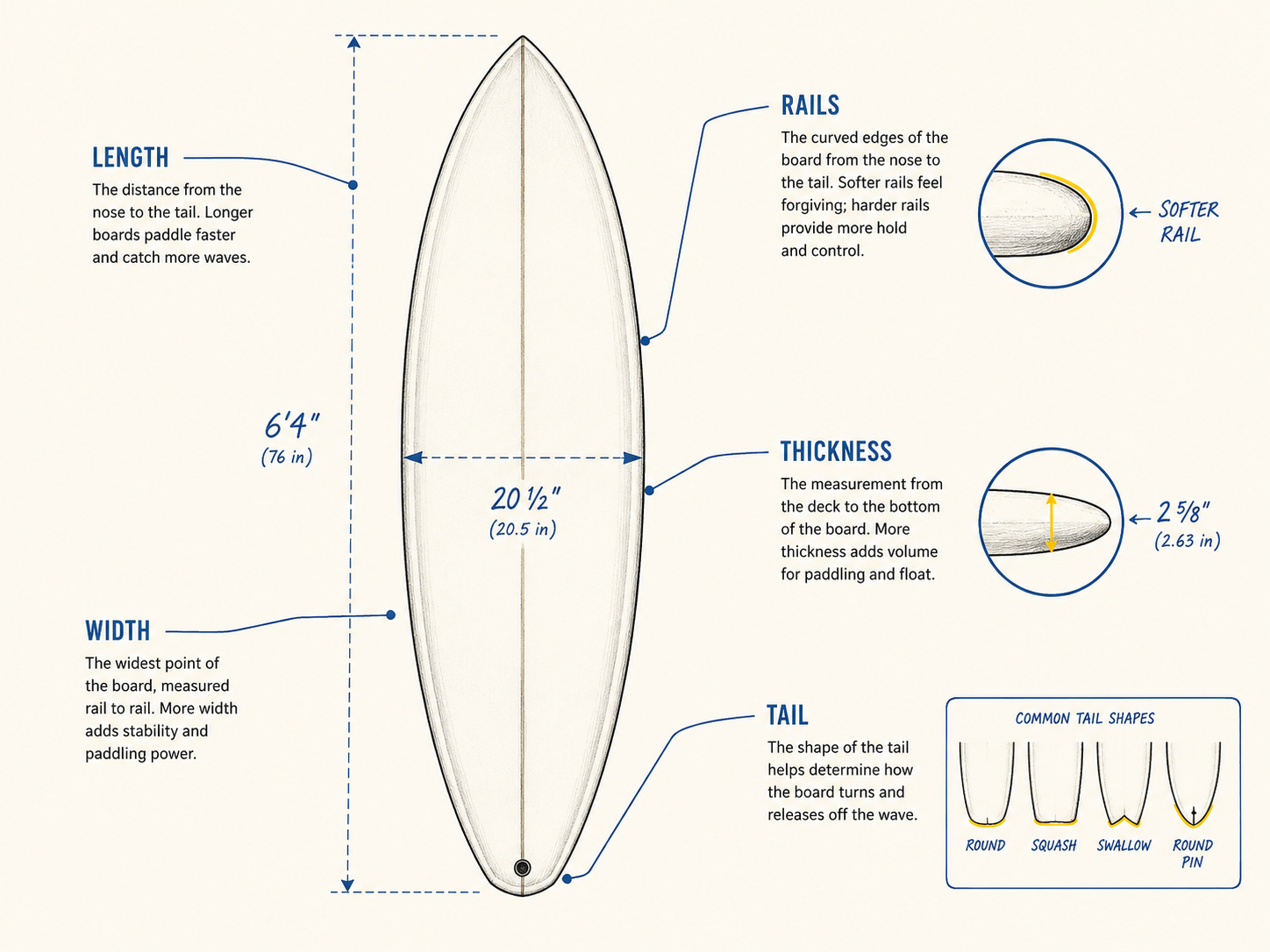
Rails are the edges of the surfboard that meet the wave face. Their thickness and shape affect how easily the board engages, releases and holds through a turn.

Quick read

Three things to know

The essentials before you continue.

  1. 01Fuller rails are often more forgiving.
  2. 02Refined rails can engage more precisely but demand control.
  3. 03Rail shape changes from nose to tail.
Default guide image for Surfboard Rails Explained. Replace using the Featured Image panel.

Where the board meets the wave

The rail is a major contact point between board and water. During a turn, the surfer places part of the rail into the wave face to create hold and change direction.

Fuller rails

More volume in the rail can add forgiveness and help the board carry speed. It can also make the rail harder to sink deeply for a lighter surfer or in a tight turn.

Refined rails

Thinner or more tapered rails can engage with less pressure and provide a precise feel. They may be less forgiving when weight is placed poorly or the take-off is unstable.

The rail changes along the board

Nose rails, centre rails and tail rails perform different jobs. A useful assessment looks at the complete rail profile and how it works with rocker, tail and volume distribution.

What this means for a beginner

Enough rail volume can make the board less sensitive to small balance errors during early progression.

What this means for a progressing surfer

Move toward more refined rails only when you can apply pressure consistently and understand where the board is engaging.

Common mistake to avoid

Choosing thin rails for performance without considering body weight, stance and current control.