
\n\n\n\n\n\n\n
Location: Mangalore, India We Ship All Over India
Board DesignAll Surfers4 min read

Surfboard Fin Setups

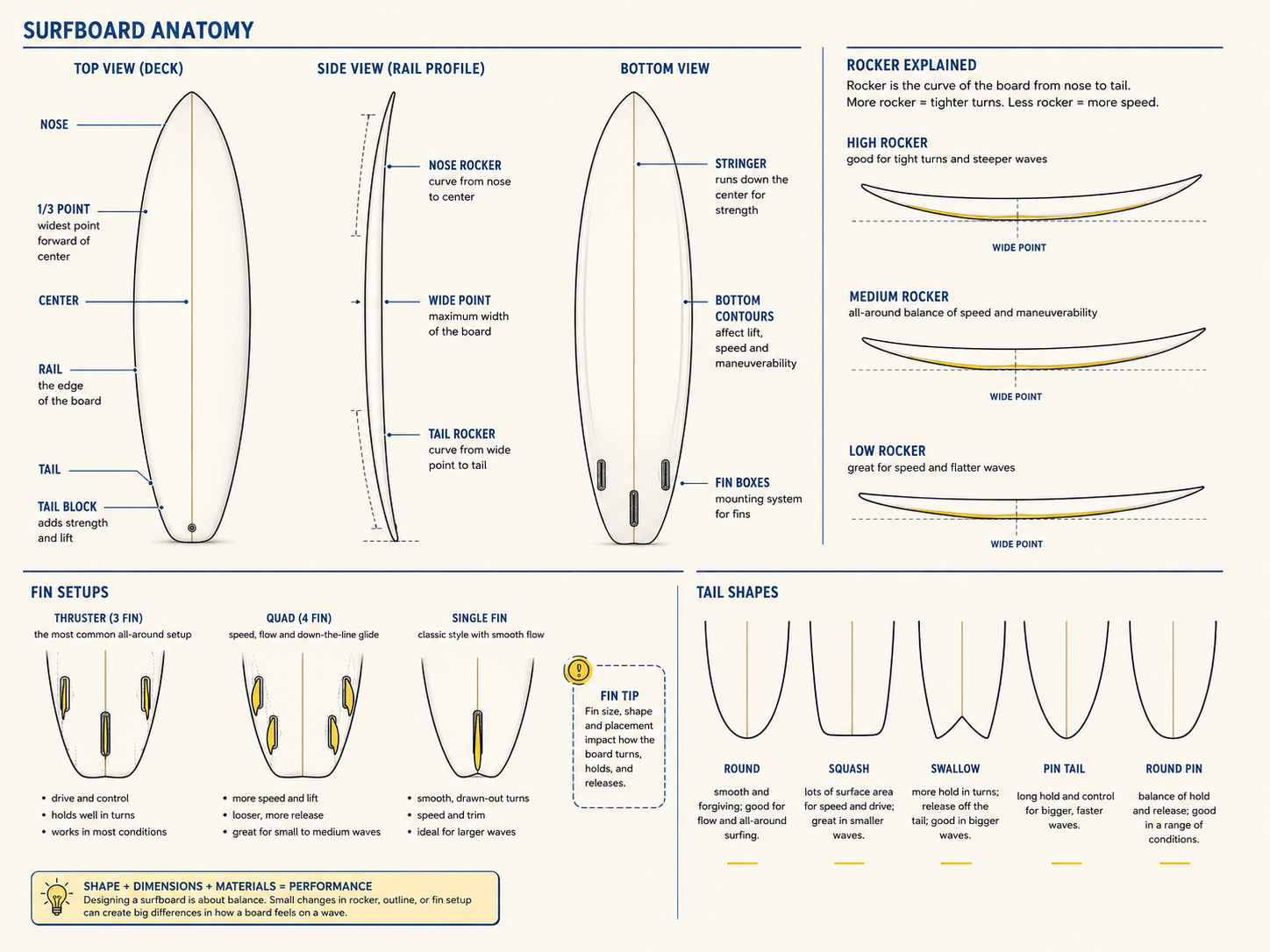
A fin setup affects direction, hold, speed and how the board releases through a turn. The board must be designed for the setup, and fin size and shape also matter.

Quick read

Three things to know

The essentials before you continue.

  1. 01Fin count alone does not describe the complete feel.
  2. 02Use only setups supported by the board’s boxes and design.
  3. 03Fin condition and correct installation matter.
Default guide image for Surfboard Fin Setups. Replace using the Featured Image panel.

What fins do

Fins resist sideways movement and help the board hold a line. Their number, position, size and flex affect how the board tracks and redirects.

Common arrangements

Single fins are strongly associated with many longboards and flowing lines. Twin fins can feel fast and free. Thrusters are widely used for balanced hold and control, while quads can offer speed and grip without a centre fin. These are broad tendencies, not guarantees.

Board design comes first

Fin boxes indicate available options, but the board’s bottom, tail and rail design determine which setups make sense. Follow the manufacturer’s intended configurations rather than forcing an unsupported arrangement.

Practical checks

Install fins correctly and inspect for movement, damage or damaged boxes. If a fin box is cracked or loose, stop treating it as a simple fin adjustment and have the board assessed.

What this means for a beginner

A predictable setup on a stable board is more useful than experimenting with fins before basic control is consistent.

What this means for a progressing surfer

Fin changes can refine a familiar board, but they should not be used to disguise a board that is fundamentally unsuitable.

Common mistake to avoid

Assuming any board with several fin boxes will perform equally well in every possible arrangement.