
\n\n\n\n\n\n\n
Location: Mangalore, India We Ship All Over India
Board TypesBeginner4 min read

Soft-Tops

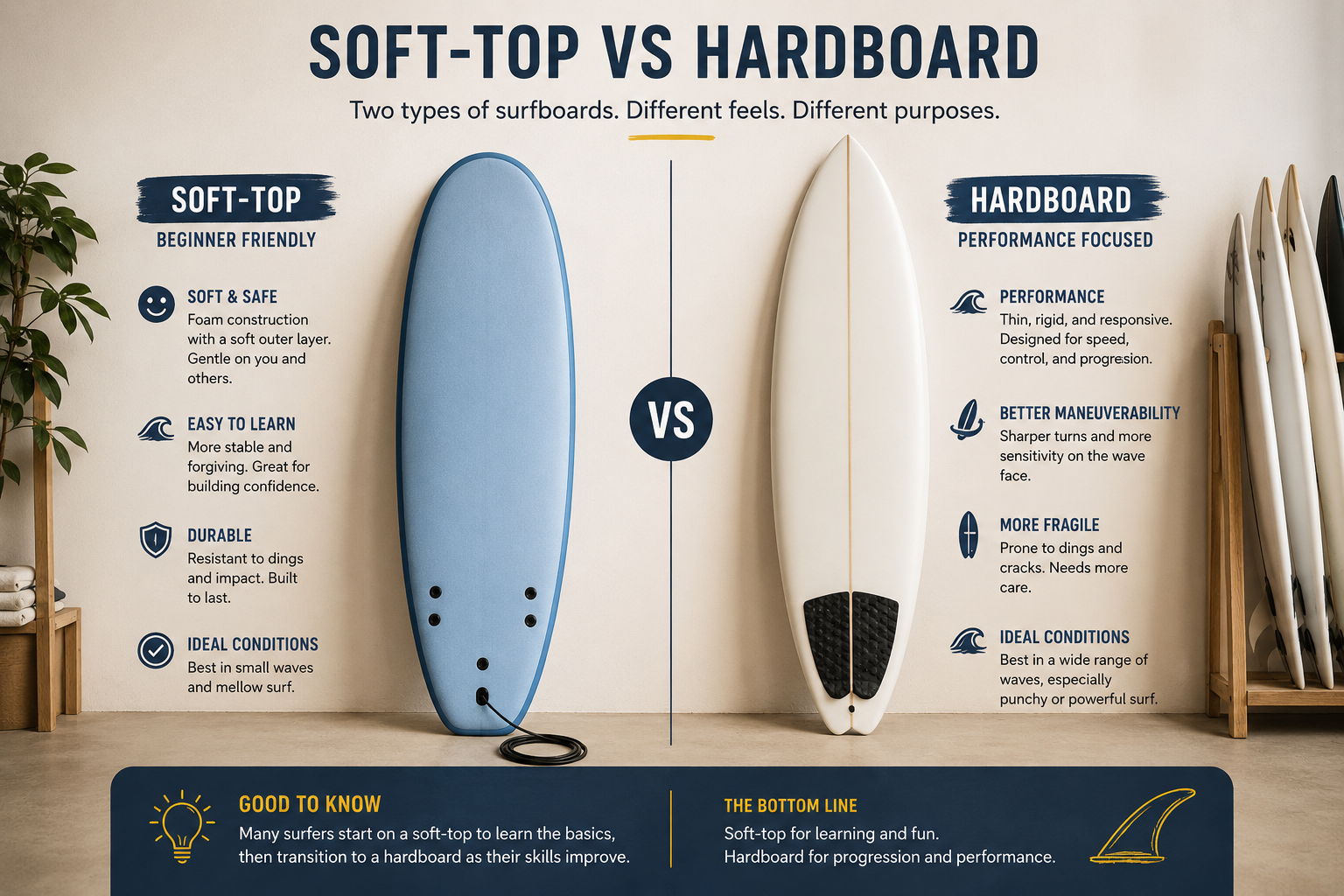
Soft-tops use a soft deck and are commonly shaped to make paddling and early wave riding more approachable. Their real suitability still depends on size, shape, construction and the surfer using them.

Quick read

Three things to know

The essentials before you continue.

  1. 01Soft construction does not make every board beginner-friendly.
  2. 02They are useful for repetition and shared learning environments.
  3. 03Choose dimensions before choosing by label.
Default guide image for Soft-Tops. Replace using the Featured Image panel.

Why people start here

Many surf schools use soft-tops because they are practical, forgiving and available in stable shapes. They help beginners focus on paddling, timing and standing rather than managing an overly sensitive board.

Not one category

Soft-tops range from large learning boards to compact shapes aimed at experienced surfers. The deck material tells you something about construction, but not enough about stability, wave entry or suitability.

Where they remain useful

A soft-top can be useful beyond the first lessons. It may suit small, weak waves, casual sessions or situations where a surfer values wave count and simplicity over maximum response.

What to inspect

Check the fin system, leash attachment, deck condition and overall construction. For a used board, look for damage, water entry or loose fittings and seek professional advice when the condition is unclear.

What this means for a beginner

Look for a size that gives you stable take-offs and enough paddle support for your weight and conditions.

What this means for a progressing surfer

A more refined soft-top can remain useful in small waves or crowded learning sessions even after you begin using hardboards.

Common mistake to avoid

Assuming any foam board will be stable enough regardless of its length, width or intended rider.