
\n\n\n\n\n\n\n
Location: Mangalore, India We Ship All Over India
Buying GuidesBeginner4 min read

Soft-Top vs Hardboard

A soft-top is often the more forgiving learning platform, while a hardboard can offer a more direct and responsive feel. The right choice depends on control, consistency, conditions and how the board will be used.

Quick read

Three things to know

The essentials before you continue.

  1. 01Soft-tops are not only for first-day surfers.
  2. 02A hardboard does not automatically improve technique.
  3. 03Transition when control is repeatable, not because of status.
Default guide image for Soft-Top vs Hardboard. Replace using the Featured Image panel.

What a soft-top does well

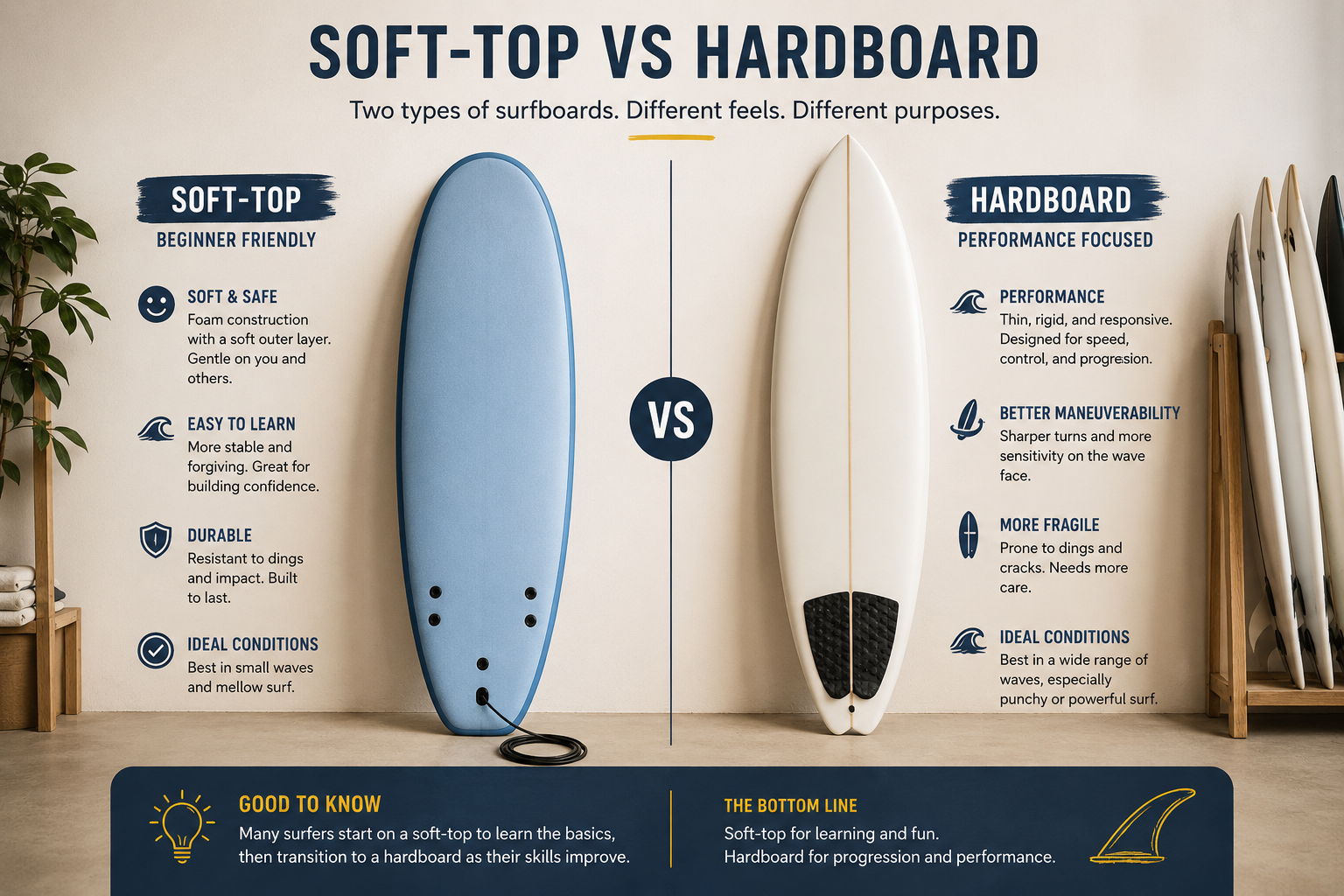
Soft-top boards are commonly used for learning because their construction and shapes are often forgiving. They can provide useful stability, easy paddling and a platform for repeating take-offs and basic direction changes.

What changes on a hardboard

Hardboards can give clearer feedback through the rails, bottom shape and fins. They may feel quicker to react, but that response also exposes poor positioning and rushed movements. The transition is useful only when you have enough control to use the difference.

Think beyond the label

Not every soft-top is large and slow, and not every hardboard is demanding. Dimensions, outline and volume still matter. A large, stable hardboard may be a smaller step than moving to a compact soft-top designed for more experienced surfing.

Choose by session quality

Compare how many waves you catch, how controlled your take-offs are and whether you can keep the board clear of other surfers. A board category should support better practice, not simply change how the equipment looks under your arm.

What this means for a beginner

A suitable soft-top can make early practice more productive by improving stability and reducing the consequences of small handling mistakes.

What this means for a progressing surfer

Move to a hardboard when you can catch waves, control direction and manage the board consistently enough to benefit from the extra response.

Common mistake to avoid

Switching because a hardboard appears more advanced, even though wave count and take-off consistency are still low.