\n\n\n\n\n\n\n
Location: Mangalore, India We Ship All Over India
Board TypesAll Surfers4 min read

Longboards

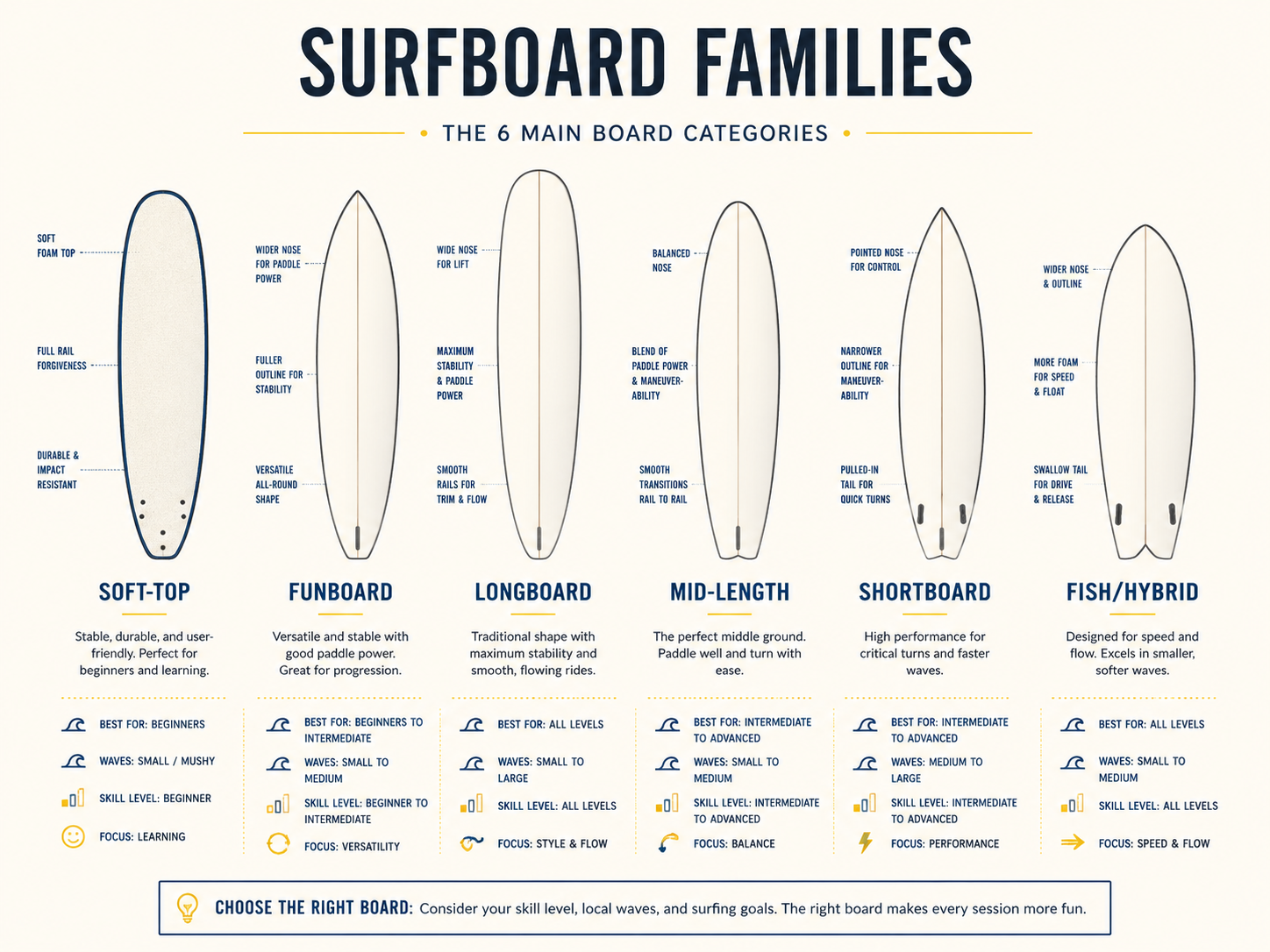
Longboards use length, planing area and glide to enter waves early and carry speed. They are not merely oversized beginner boards; many are designed around a distinct style and technique.

Quick read

Three things to know

The essentials before you continue.

  1. 01Length can improve glide and wave entry.
  2. 02Longboards vary from stable cruisers to specialised shapes.
  3. 03More board also requires deliberate handling and control.
Default guide image for Longboards. Replace using the Featured Image panel.

Why length matters

A longer rail line and greater planing area can help a board glide efficiently and enter waves earlier. This makes many longboards productive in smaller or softer conditions.

Different longboard directions

Some longboards prioritise stability and smooth trimming. Others use refined rails, rocker and tail shapes for more technical surfing. The dimensions and design intent matter as much as the overall length.

Handling the board

Longboards are larger to carry, store and control. Turning through whitewater, managing the board in wind and keeping distance from other surfers all require attention. More flotation does not remove the need for board control.

Who benefits

A longboard can suit beginners, experienced longboarders and surfers who want high wave count in smaller conditions. The right question is not whether it is advanced, but whether its design matches your ability, transport and regular waves.

What this means for a beginner

A stable longboard can support learning, but it must still be manageable for you to carry, turn and control safely in the water.

What this means for a progressing surfer

Choose between all-round glide and more specialised longboard performance based on the waves and style you actually want to surf.

Common mistake to avoid

Assuming every longboard is easy simply because it has more length.