
\n\n\n\n\n\n\n
Location: Mangalore, India We Ship All Over India
ProgressionBeginner4 min read

Moving from a Soft-Top to a Hardboard

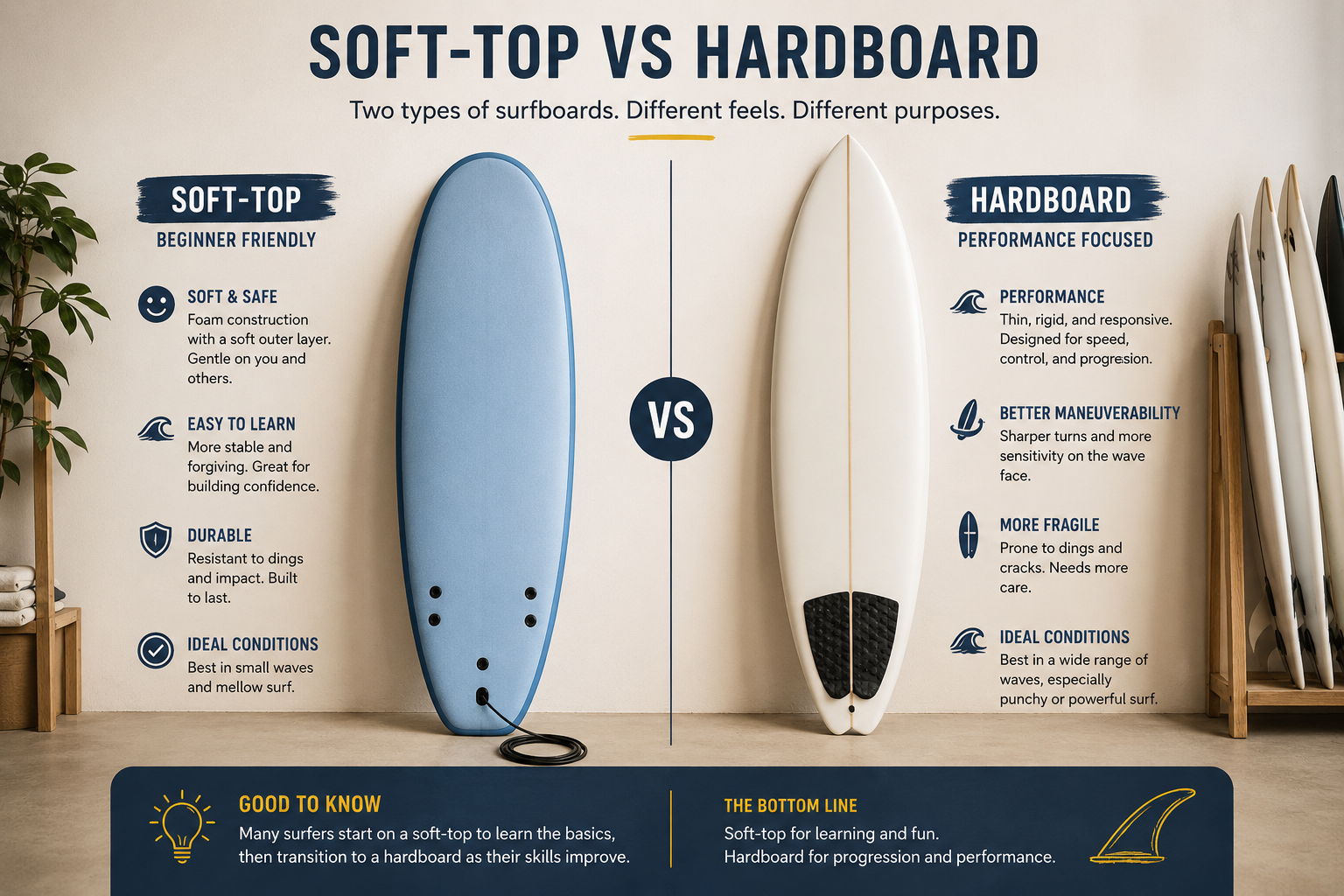
Move from a soft-top to a hardboard when your take-offs, direction control and board handling are repeatable. Choose a hardboard that keeps enough size and stability so you can learn the new feel without losing all your wave count.

Quick read

Three things to know

The essentials before you continue.

  1. 01Construction change does not require a dramatic size drop.
  2. 02Expect clearer feedback and less forgiveness.
  3. 03Board control around others becomes even more important.
Default guide image for Moving from a Soft-Top to a Hardboard. Replace using the Featured Image panel.

What feels different

A hardboard often gives more direct feedback from the rails, bottom and fins. Small errors may feel more obvious, while well-timed pressure can produce a clearer response.

Keep the platform sensible

Moving to a hardboard does not mean you must also move to a shortboard. Retaining useful length, width and volume allows you to focus on the construction and rail feel rather than relearning paddling from the beginning.

Choose the right conditions

Make early sessions in familiar, manageable waves. Crowded or unusually powerful conditions make it difficult to separate board adjustment from the demands of the ocean.

Review after several sessions

Expect an adjustment period, but watch the numbers that matter. If you cannot catch enough waves to practise, a larger or more forgiving hardboard may be a better transition.

What this means for a beginner

Stay with the soft-top until you can catch suitable unbroken waves and control the board without regular assistance.

What this means for a progressing surfer

A larger funboard or stable hardboard can be a more useful bridge than an immediate move to a compact shortboard.

Common mistake to avoid

Changing construction, length, width and volume all at once.