
\n\n\n\n\n\n\n
Location: Mangalore, India We Ship All Over India
Board DesignAll Surfers4 min read

Surfboard Construction: Soft-Top, Epoxy and PU

Soft-top, epoxy and PU describe broad construction families rather than a complete measure of quality or performance. Weight, flex, durability and repair needs vary within each family.

Quick read

Three things to know

The essentials before you continue.

  1. 01Construction affects feel and ownership as well as performance.
  2. 02Quality varies within every material category.
  3. 03Use the maker’s repair guidance for the actual board.
Default guide image for Surfboard Construction: Soft-Top, Epoxy and PU. Replace using the Featured Image panel.

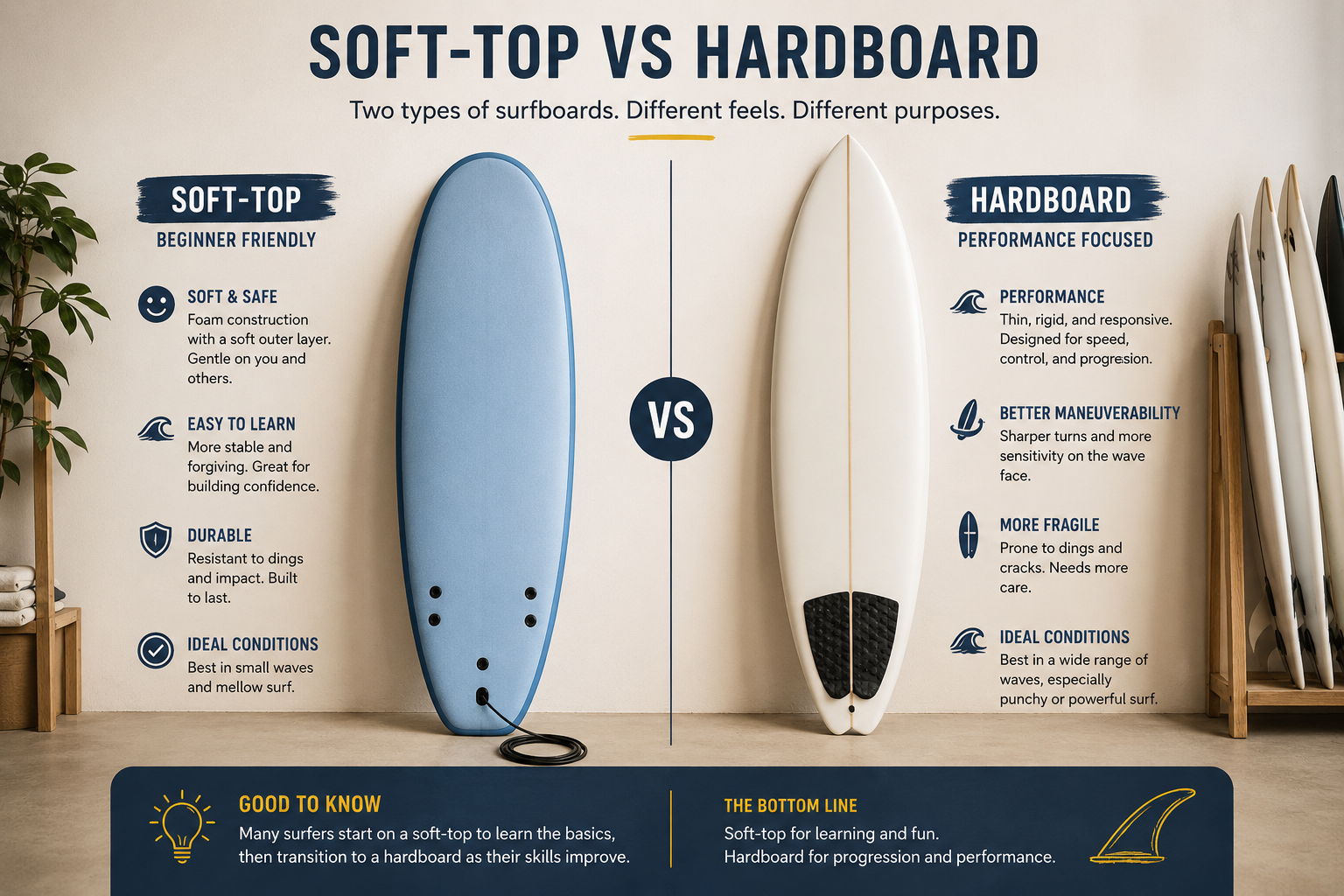
Soft-top construction

Soft-tops place a softer deck over an internal structure that varies by manufacturer. They are common in lessons and casual use, but construction quality, stiffness and repair methods are not universal.

Epoxy construction

The term usually refers to epoxy resin used with a foam core and reinforcement. Many epoxy boards feel light and buoyant, but layups differ widely, so durability and flex cannot be judged from the word alone.

PU construction

Traditional polyurethane foam with polyester resin remains common in surfboards. Many surfers value its familiar weight and flex, though actual feel depends on glassing schedule, shape and build quality.

Ownership matters

Consider heat exposure, transport, storage and access to repair. Always identify the actual construction before repairing damage because materials and compatible resins can differ.

What this means for a beginner

Choose a construction that suits your handling, storage and learning environment rather than buying from material reputation alone.

What this means for a progressing surfer

When comparing familiar shapes, construction can influence weight, flex and feedback, but shape differences may be more significant.

Common mistake to avoid

Assuming every epoxy board is identical or every PU board has the same flex and durability.