\n\n\n\n\n\n\n
Location: Mangalore, India We Ship All Over India
Board DesignAll Surfers4 min read

Surfboard Tail Shapes

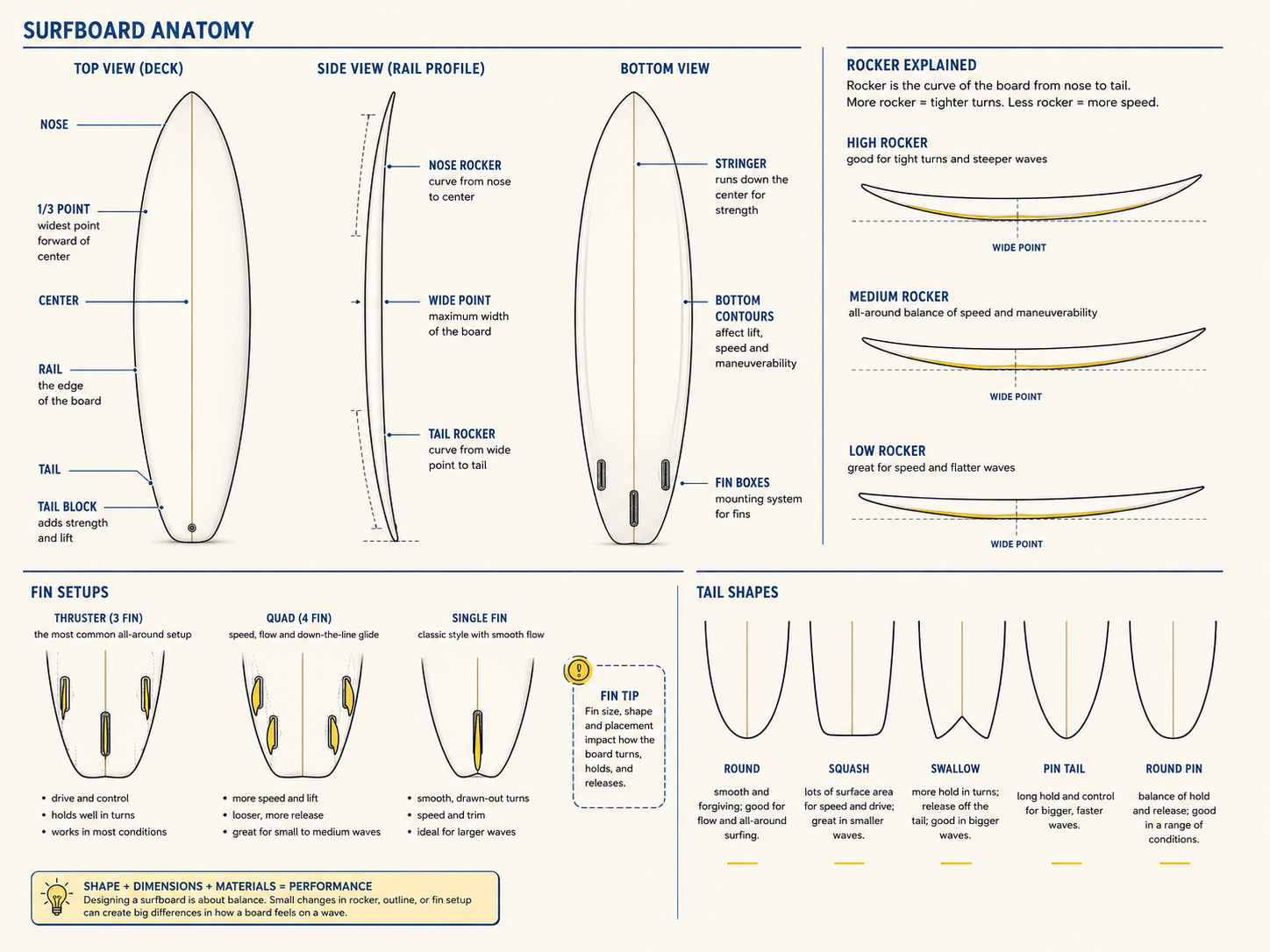
Tail shape changes the outline and surface area at the rear of the board. It can influence lift, hold, release and the way the board completes a turn, but it works together with rails, rocker and fins.

Quick read

Three things to know

The essentials before you continue.

  1. 01Tail area matters as much as the tail label.
  2. 02Wider tails can create lift and speed.
  3. 03Narrower tails can increase control in stronger surf.
Default guide image for Surfboard Tail Shapes. Replace using the Featured Image panel.

More than the final outline

Names such as squash, round, pin and swallow describe the end of the board, but the width and volume leading into the tail are equally important. Two squash tails can behave differently if one is much wider.

Wider tails

More tail area can create lift and help a board generate speed in weaker waves. The board may feel lively, though control can depend on rails, fins and how much pressure the surfer can apply.

Narrower tails

A narrower tail can sit deeper in the water and provide control in faster or more powerful waves. It may require more wave energy and better positioning to keep speed.

Read the combination

Tail shape is one part of the system. Rocker controls the curve, rails influence engagement and fins add direction and hold. Compare the whole rear third of the board rather than buying from a tail icon.

What this means for a beginner

Do not choose a first board primarily from tail terminology; overall stability and suitability matter more.

What this means for a progressing surfer

Use tail shape to refine a board choice after you understand the waves and turning feel you want.

Common mistake to avoid

Expecting one tail shape to guarantee a specific performance characteristic on every board.