
\n\n\n\n\n\n\n
Location: Mangalore, India We Ship All Over India
Board DesignAll Surfers4 min read

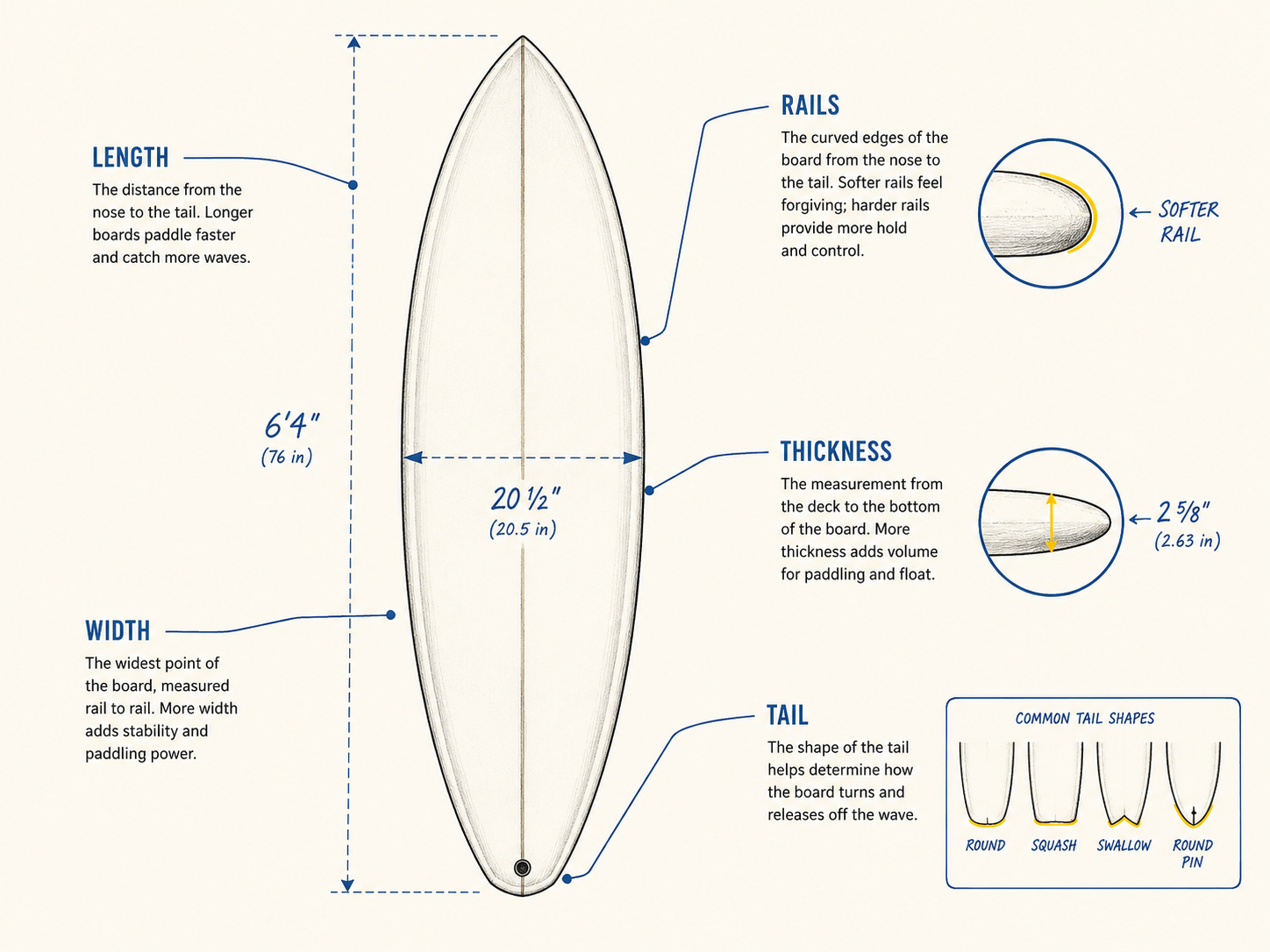
Surfboard Length, Width and Thickness

Length, width and thickness work together to shape paddling, stability, turning and flotation. None of the dimensions should be judged alone.

Quick read

Three things to know

The essentials before you continue.

  1. 01Length affects glide and rail line.
  2. 02Width influences stability and planing area.
  3. 03Thickness adds volume but its placement matters.
Default guide image for Surfboard Length, Width and Thickness. Replace using the Featured Image panel.

Length

More length can improve glide, paddling and early wave entry. It also increases the rail line and changes how much board must be redirected through a turn.

Width

Width can create stability and planing area, but where the width sits is important. Width through the nose may support paddling, while width through the tail can influence speed, lift and turning feel.

Thickness

Thickness contributes volume, yet a thick centre with refined rails behaves differently from thick rails throughout the board. Distribution affects both flotation and how the rail engages the water.

Read dimensions together

Use the numbers to compare, then look at outline, rocker and intended use. A dimension sheet is a starting description, not a complete prediction of performance.

What this means for a beginner

Look for a balanced platform with enough width and length to make take-offs repeatable, not simply the thickest board available.

What this means for a progressing surfer

Change dimensions gradually so you can identify which trade-off is affecting your sessions.

Common mistake to avoid

Comparing boards by length while ignoring width, thickness and the outline that connects them.