\n\n\n\n\n\n\n
Location: Mangalore, India We Ship All Over India
Board TypesExperienced4 min read

Fish and Hybrids

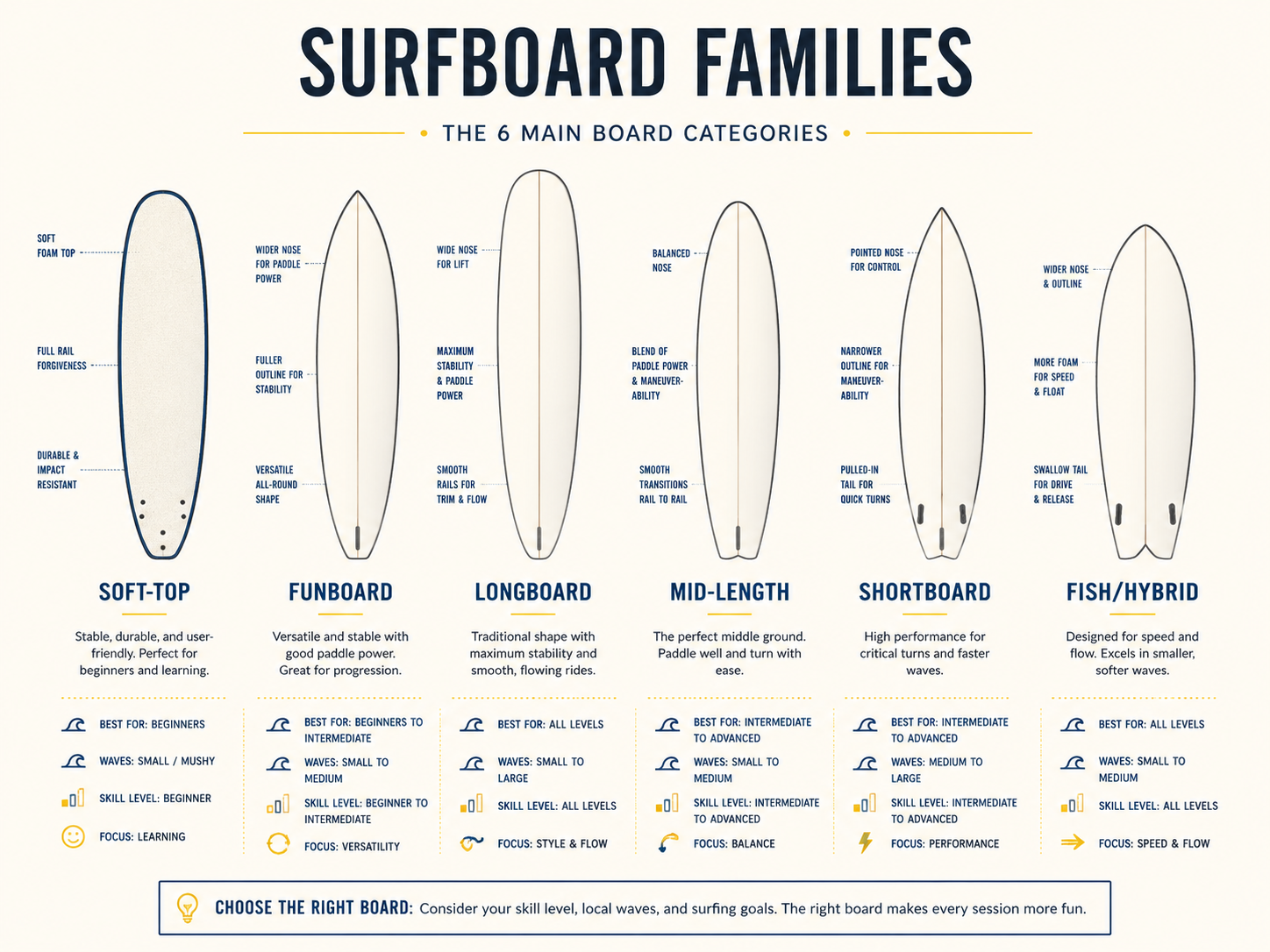
Fish and hybrid boards often place more area and volume into a shorter outline, aiming to combine speed and paddle support with compact manoeuvrability. The exact result depends on the design.

Quick read

Three things to know

The essentials before you continue.

  1. 01Shorter does not always mean lower volume.
  2. 02Wide tails and flatter rockers can change speed and control.
  3. 03Fin setup is an important part of the design.
Default guide image for Fish and Hybrids. Replace using the Featured Image panel.

Compact with area

Many fish and hybrid shapes keep useful width through the outline and carry volume efficiently. This can create a board that paddles better than its length suggests and generates speed in softer waves.

Why the feel varies

Traditional fish designs, modern performance fish and hybrid shortboards can be very different. Tail width, rocker, rail shape, bottom contour and fin arrangement all influence how freely or securely the board turns.

Who may benefit

A progressing surfer may use a hybrid to move to a shorter board without losing all paddling support. Experienced surfers may choose a fish for speed, flow or a different approach to weaker waves.

Compare the complete design

Do not buy only from the plan shape. Check how the foam is distributed, how refined the rails are and what conditions the board was designed for. A compact outline can still be demanding if the rest of the shape is performance-focused.

What this means for a beginner

Some hybrids are forgiving, but compact length can still make take-offs and stability more demanding than a larger board.

What this means for a progressing surfer

They can be useful for maintaining speed in weaker waves while introducing a shorter rail line and quicker response.

Common mistake to avoid

Treating every fish or hybrid as an easy small-wave board without checking rails, rocker and intended use.