\n\n\n\n\n\n\n
Location: Mangalore, India We Ship All Over India
Board TypesExperienced4 min read

Mid-Lengths

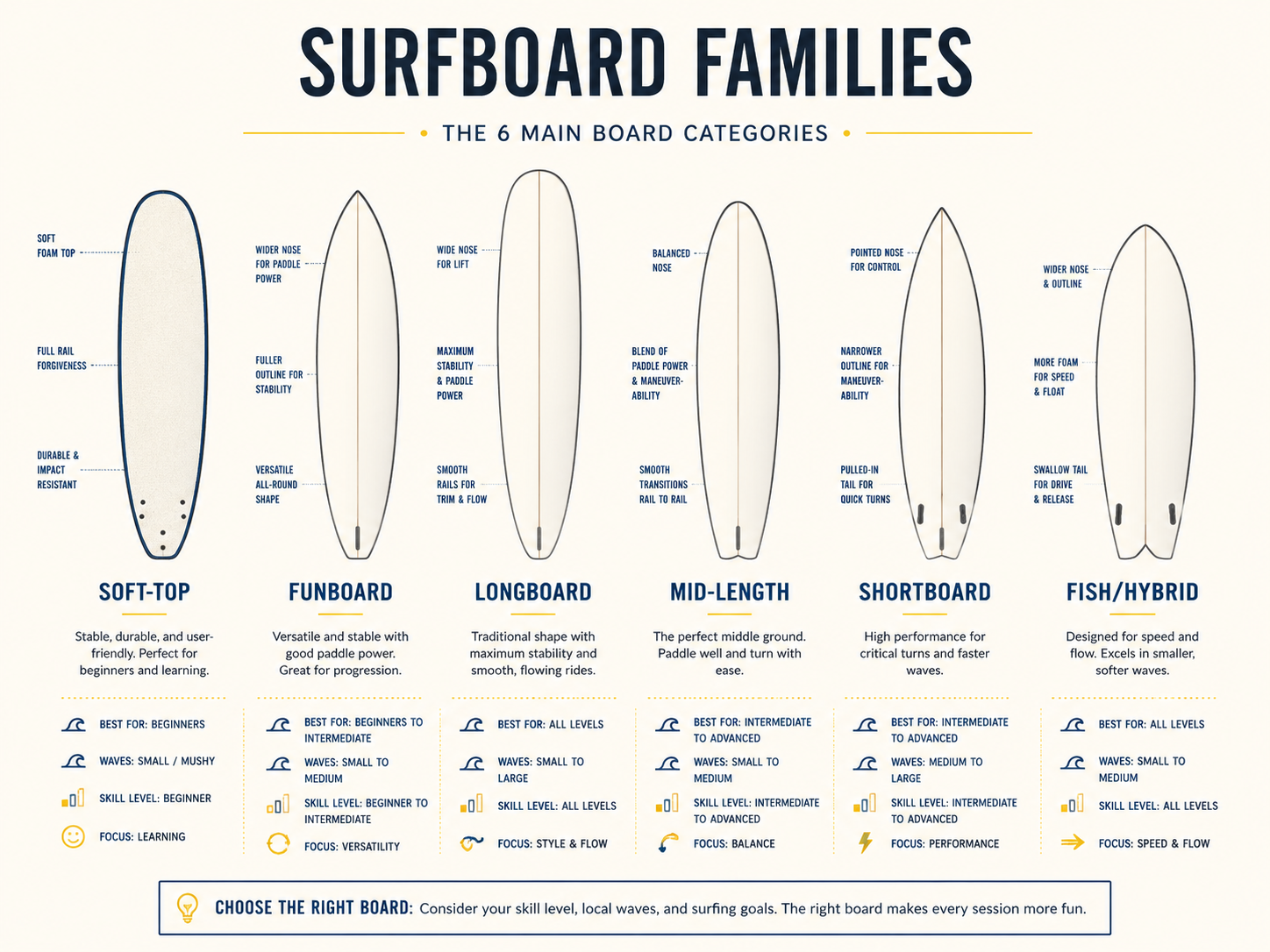
Mid-lengths generally offer more glide and paddling support than shortboards while remaining easier to redirect than many longboards. Their balance depends heavily on outline, rails, rocker and fin setup.

Quick read

Three things to know

The essentials before you continue.

  1. 01They can provide speed without extreme compactness.
  2. 02The category is broad and shape-dependent.
  3. 03They reward clean positioning rather than rushed movement.
Default guide image for Mid-Lengths. Replace using the Featured Image panel.

What sits in the middle

Mid-lengths occupy the space between compact boards and traditional longboards, but the name covers many designs. Their shared appeal is often a combination of paddle support, glide and a more responsive rail line.

How they create flow

Length can help maintain speed, while a narrower or more refined outline may allow the board to change direction more readily than a large longboard. The surfer often benefits from smoother positioning and fewer abrupt movements.

Where they work

They can suit open-faced waves, softer conditions and surfers who value wave entry. Exact performance depends on the design, so a mid-length built for clean point waves may not feel the same as an all-round shape.

What to compare

Look beyond length. Check width, volume, rail shape, rocker, tail and fins. A stable, full-outline mid-length can be approachable; a narrow shape with refined rails may demand much more precision.

What this means for a beginner

Some stable mid-lengths can work for capable beginners, but the category should not be assumed to replace a dedicated learning board.

What this means for a progressing surfer

A mid-length can be useful when you want more rail engagement and flow without giving up too much wave entry.

Common mistake to avoid

Choosing one because it is fashionable without checking whether its rails and rocker suit your ability and waves.