\n\n\n\n\n\n\n
Location: Mangalore, India We Ship All Over India
Board TypesBeginner4 min read

Funboards

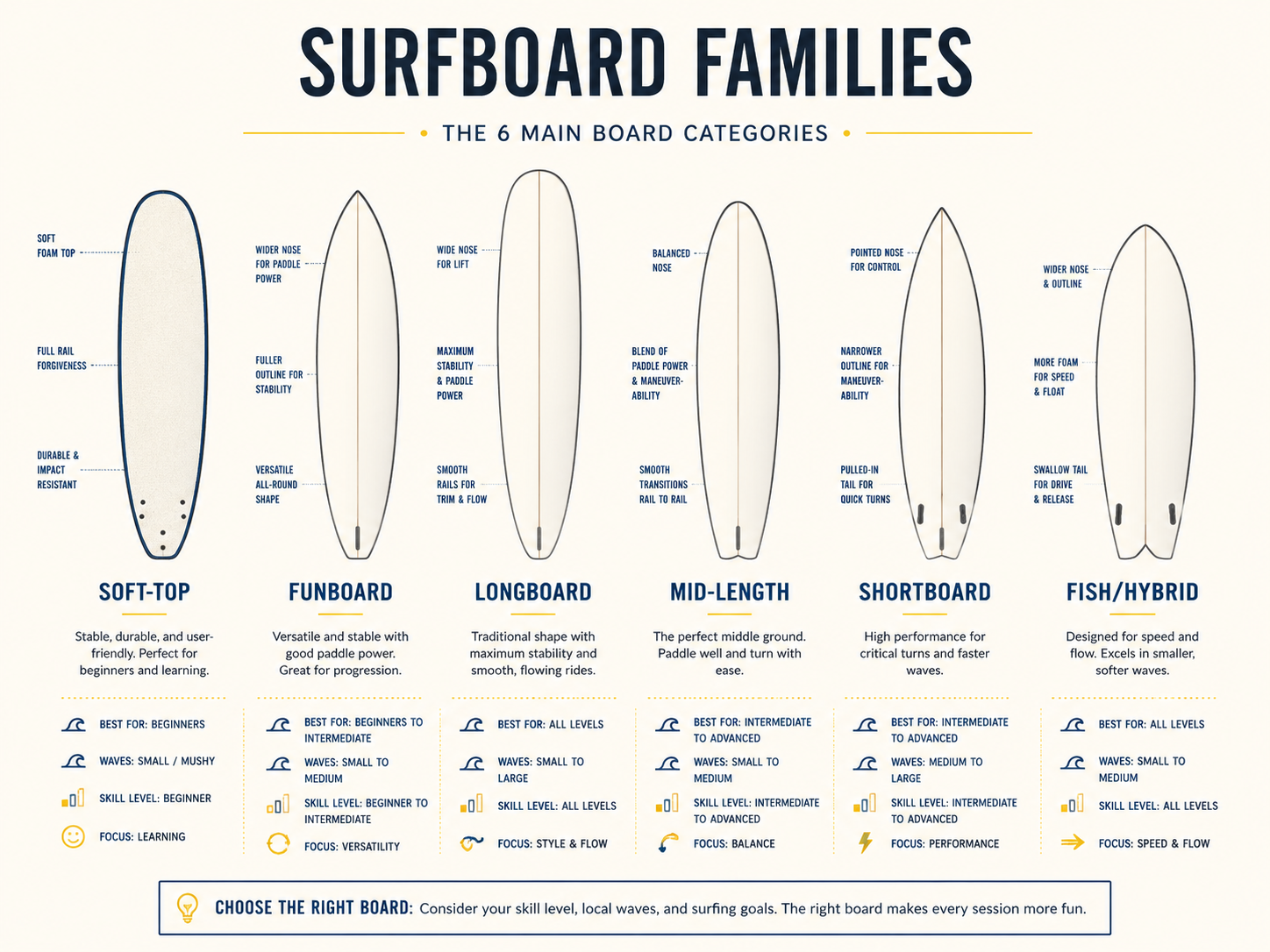
Funboards generally combine useful length and paddling support with more manoeuvrability than a large beginner board. They can be a sensible transition when chosen with enough volume and width.

Quick read

Three things to know

The essentials before you continue.

  1. 01They can preserve wave count during progression.
  2. 02The category covers many different outlines.
  3. 03A funboard should solve a specific transition problem.
Default guide image for Funboards. Replace using the Featured Image panel.

The middle ground

Funboards often sit between long beginner boards and compact performance boards. Their extra length can support paddling and wave entry, while a more refined outline may allow easier direction changes.

Why the label is broad

There is no single universal funboard shape. Some are wide and stable, others are closer to elongated shortboards. Compare the actual dimensions, volume distribution, rocker and tail rather than relying on the category name.

Who they can suit

They are commonly useful for surfers who catch unbroken waves and want more response without making a severe jump. They can also suit occasional surfers who value easy paddling more than high-performance turning.

How to judge the transition

A good transition should keep sessions active. If wave count collapses or paddling becomes the main challenge, the board may be too demanding even if it feels lively once you are standing.

What this means for a beginner

A larger funboard may suit an improving beginner who already controls take-offs and wants a durable hardboard option.

What this means for a progressing surfer

Use it to gain rail awareness and turning response without sacrificing all the paddle help of a larger board.

Common mistake to avoid

Buying a narrow, low-volume board simply because it is sold under the broad funboard label.