
Why people start here
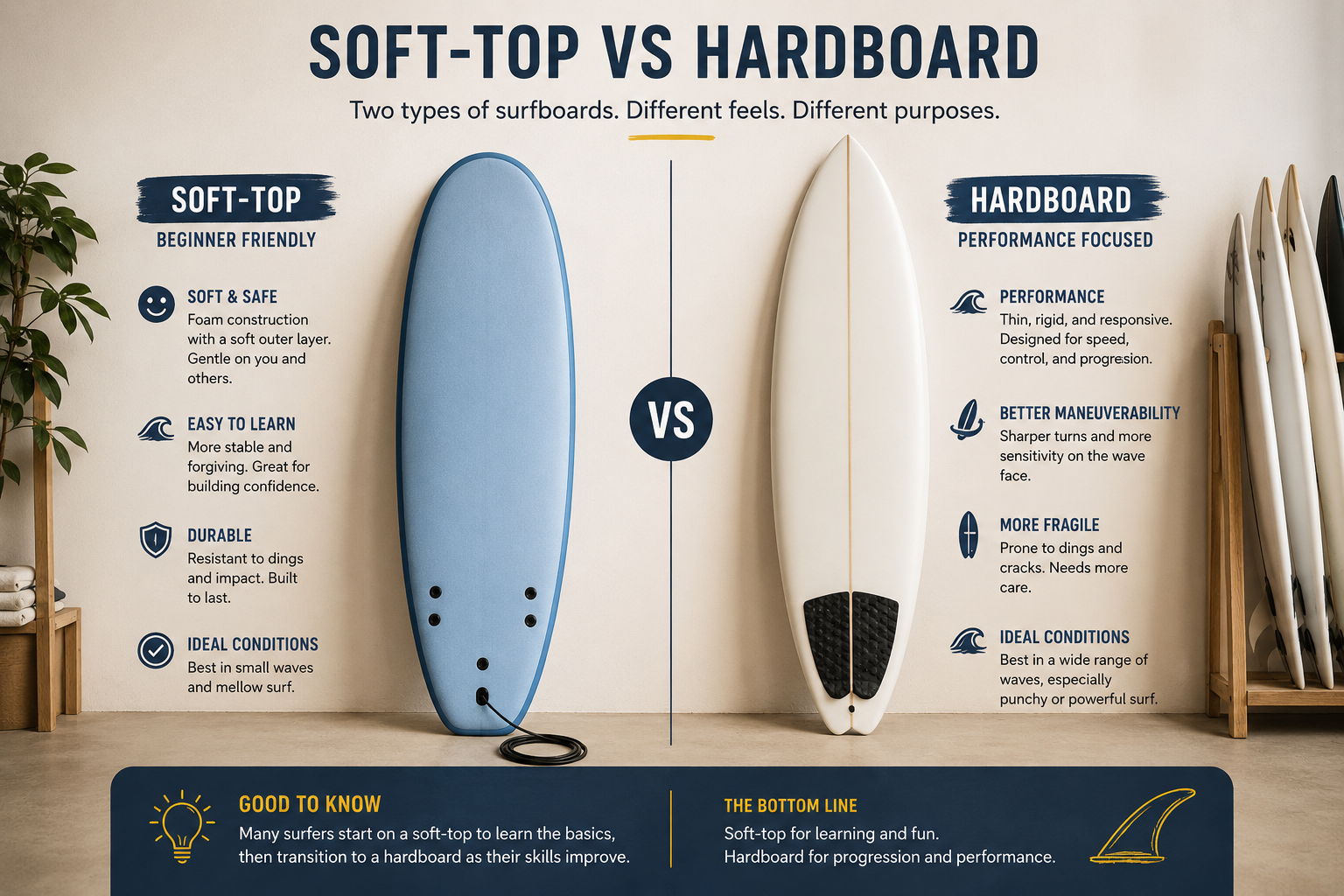
Many surf schools use soft-tops because they are practical, forgiving and available in stable shapes. They help beginners focus on paddling, timing and standing rather than managing an overly sensitive board.
Not one category
Soft-tops range from large learning boards to compact shapes aimed at experienced surfers. The deck material tells you something about construction, but not enough about stability, wave entry or suitability.
Where they remain useful
A soft-top can be useful beyond the first lessons. It may suit small, weak waves, casual sessions or situations where a surfer values wave count and simplicity over maximum response.
What to inspect
Check the fin system, leash attachment, deck condition and overall construction. For a used board, look for damage, water entry or loose fittings and seek professional advice when the condition is unclear.