
What a soft-top does well
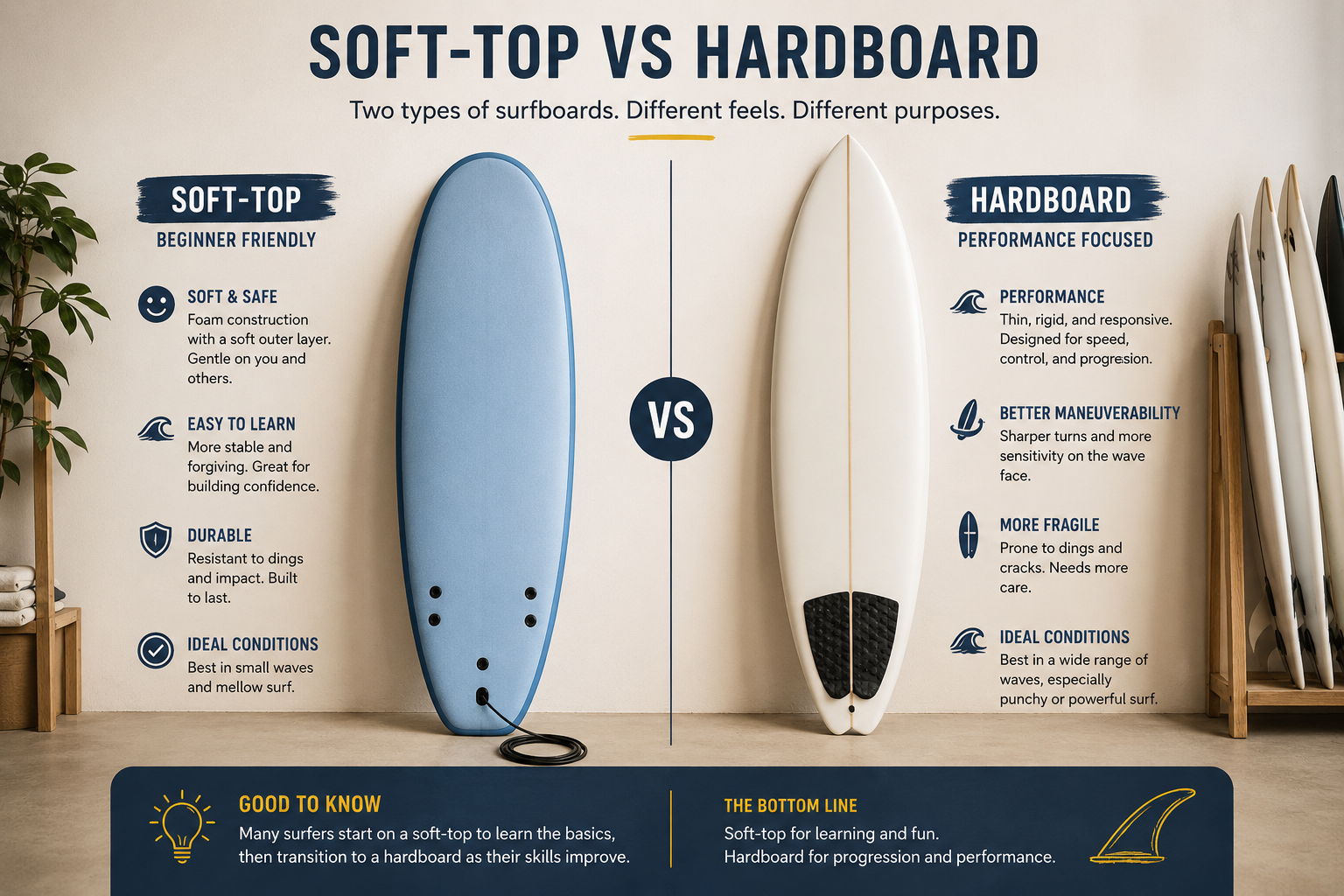
Soft-top boards are commonly used for learning because their construction and shapes are often forgiving. They can provide useful stability, easy paddling and a platform for repeating take-offs and basic direction changes.
What changes on a hardboard
Hardboards can give clearer feedback through the rails, bottom shape and fins. They may feel quicker to react, but that response also exposes poor positioning and rushed movements. The transition is useful only when you have enough control to use the difference.
Think beyond the label
Not every soft-top is large and slow, and not every hardboard is demanding. Dimensions, outline and volume still matter. A large, stable hardboard may be a smaller step than moving to a compact soft-top designed for more experienced surfing.
Choose by session quality
Compare how many waves you catch, how controlled your take-offs are and whether you can keep the board clear of other surfers. A board category should support better practice, not simply change how the equipment looks under your arm.