
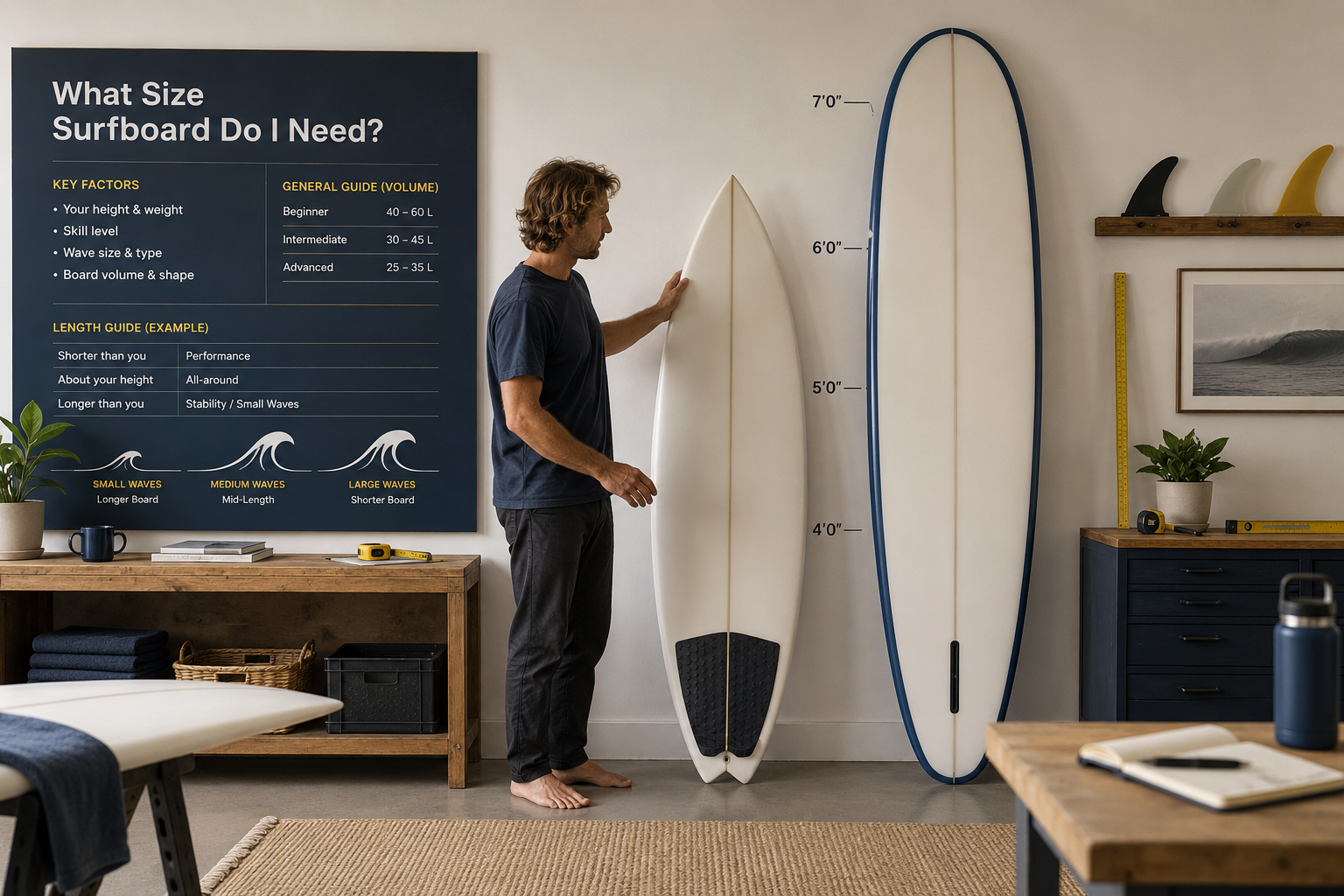
Size is a combination, not one number
Surfboard size includes length, width and thickness, while volume summarises how much space the board occupies. Two boards of the same length can behave very differently because their width, outline, rocker and volume distribution are different.
Ability changes the requirement
A beginner generally benefits from more stability and easier wave entry. A progressing surfer may accept a little less stability in exchange for easier turning. An experienced surfer may use several sizes for different waves, but that does not make those sizes sensible for someone still building consistency.
Weight and fitness matter
A heavier surfer usually needs more usable flotation than a lighter surfer at the same ability. Paddle fitness also matters. A compact board may be technically possible to ride, yet still reduce the number of waves you catch because it demands more effort and more precise positioning.
Use your regular conditions
Small, weak waves often reward paddle power and planing area. Faster or steeper waves may allow a different balance. Choose around the conditions you actually surf most, then treat unusual conditions as a separate board problem rather than forcing one board to do everything.