
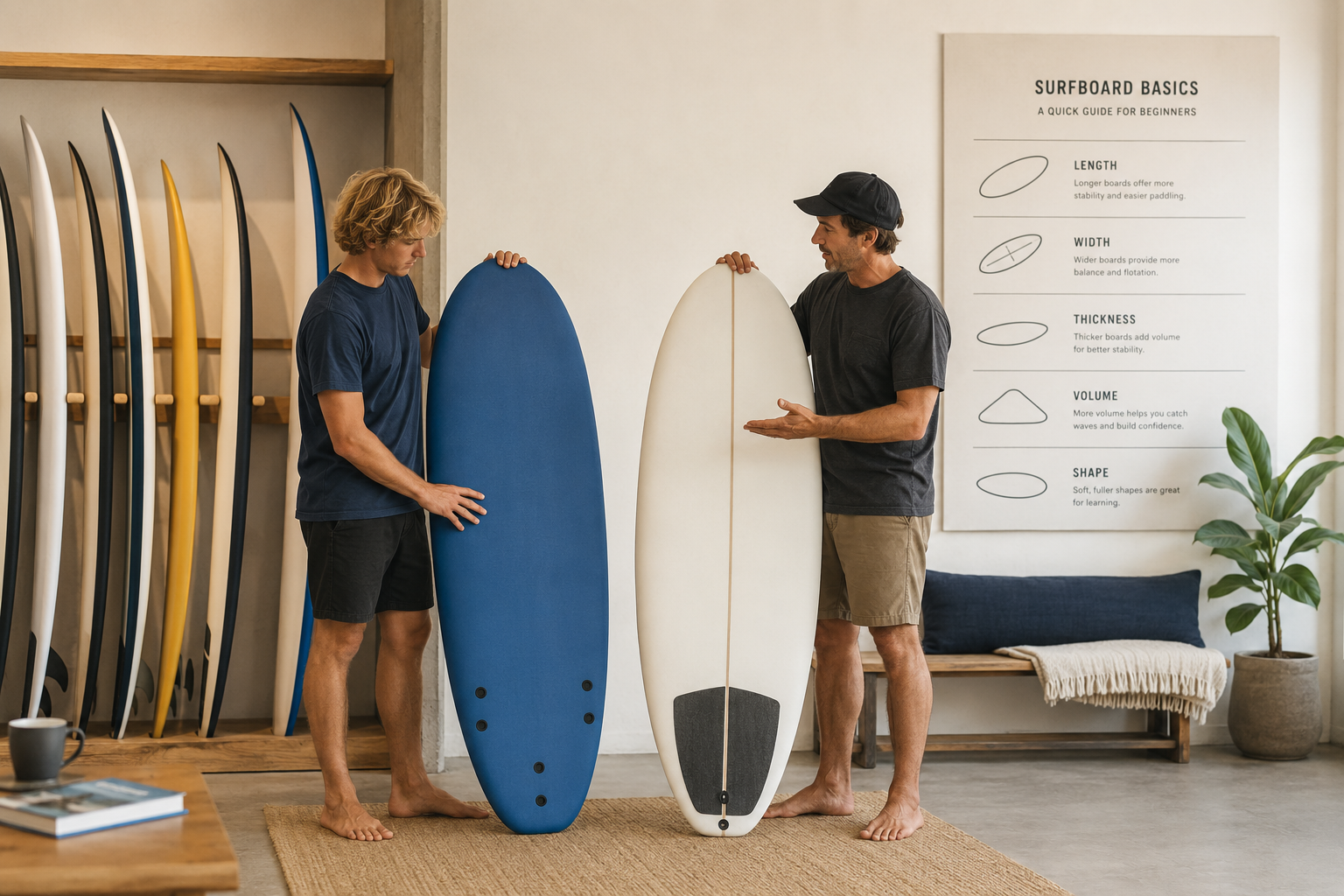
Start with the job the board must do
Your first surfboard is not a reward for looking like a surfer. It is a tool for getting enough successful repetitions to learn. The right board should make paddling manageable, wave entry predictable and standing up less rushed. That normally means choosing stability and flotation before sharp response.
Match three things
Consider your current ability, your body size and the waves you will surf most often. A board that works in gentle beginner waves may feel very different in steeper or stronger surf. Local coaching or advice from someone who knows the break can be more useful than copying a board used by a lighter or more experienced surfer.
Compare categories sensibly
Soft-tops are practical for many early sessions because they are forgiving and stable. Funboards and larger hardboards can make sense when you already control the basics and want a different feel. The label matters less than whether the dimensions and shape support your current surfing.
Use progress as the test
A useful first board should help you catch more waves, complete more take-offs and practise turning with control. If the board leaves you exhausted before you reach the take-off point, or you miss most waves because it is difficult to paddle, it is probably making learning harder than necessary.